Wednesday, September 9, 2020

Why wait?


Many times, parents that I help are concerned that their kids are not speaking, or are not speaking in sentences that are understandable enough to get their needs met. Let me stop right here and say, I am not a speech therapist. I have worked with many great speech therapists and speech therapy assistants over the years and learned a lot from them, but when there is a speech concern for any of my kiddos, I call in the experts. That is their field. That being said, I do work on language during play with kiddos. Especially social language. We also work on language to get needs met such as either using signs, or words like "help" "want" "more" "all done" etc. Using language during play, talking about what children are doing is something that comes natural to me, but doesn't always come natural to everyone else. And I am also a talker when playing with children, so when I learned about expectant wait times, it was something new to me too. 

Expectant waiting is when you say something to the child (or person you are talking to) and give them time to process the information and respond. This can take any amount of time you feel the child may need but usually we start with about 10 seconds which when you think about it seems like nothing, but when you put it into practice feels like a really long time! And when you have parents that are also talkers (which is nothing bad at all! As I am a talker as well, and exposing a child to language is always a good thing!) having them slow down and wait for a child to process the information that they have given, and answer a question or respond to a command, can be difficult at first. I know it was a little hard for me at first too! 

Children who have any kind of speech delay, receptive or expressive, or are hard of hearing, will especially need wait time to process information or questions that you ask of them. When we ask questions of our younger children, I like to try to phrase it in smaller bites "you want milk?" "give me ball." "go get doll." while they are still working on learning to answer questions or follow directions. Then as they get better responding to these directives, start to expand the language. "Do you want your ball?" "Go get your doll." "Give me your blue block." Starting with longer requests can work, but if they are getting frustrated because they don't understand or are having a harder time processing too many words, breaking them down in to smaller chunks may help them have an easier time processing and giving an answer or responding to your request. And giving the time they need, even if it feels like a really long time for you, will help your child have decreased frustration levels and everyone will be happier as your child learns to express themselves and get their wants and needs met. 

*Again, these are things that have worked for me as a Developmental Therapist, having worked in EI for 8 years. I have worked alongside many great speech therapists, and speech therapy assistants, but always refer my kids to speech therapists when there is a speech concern. 

Monday, August 24, 2020

Getting ready for school

 How does school look for you this year? For us, all 3 of my kids are starting online. Which I, personally could not be happier about right now. I have been hearing so many reports of kids going back to school and being sent home the first day with civid. Or just in our school district, they haven't even started and there is a case of covid at one of my kid's schools. We are fortunate that our kids are able to do online school while I and my husband work from home. I am able to make my job flexible enough that I can help out all 3 kids and take an hour here or there to also do my work via zoom, or once or twice a month see a kid in their home. I understand not everyone has that ability. Nor does everyone have the patience for it. Many people have to work right now and are unable to be there while their kids do online schooling. Making it impossible for their kids to get any work done. It's a difficult situation all around. The teachers can only work so many hours in a day. But parents may not be home until 4-6 pm in order to help their children. And in the instances of younger children or children with executive functioning issues, that means school is not getting done. At lest not until the parents are home. And by then everyone is exhausted. It is a very difficult situation this year. I think the best we can do is concentrate on making sure everyone is healthy, both mentally and physically, and feels loved and appreciated (teachers, parents, and kids), and try to get a little leaning in there as well ,while respecting it may not look the same for all families. I've set up some cozy corners with what space we do have in our house. Admittedly we do have a lot more space that our old house, but not a ton to make a whole school room. But, this is just an idea of what we have done with some of our space with the items that we have. And I know that all the kids teachers will likely give is more stuff to include as well. I also have items to supplement learning as need be if the stuff they are learning is too hard and we need to take a step back to re-learn some things. Because lets be honest, last spring was hard! It was hard on teachers figuring everything out. It was hard on parents figuring everything out. And it was hard on the kids just trying to muddle their way through. We may need to review a few things. And that is perfect OK! 


Wednesday, August 5, 2020

Changes


How do you feel about changes? Do they make you excited? Or do they make you anxious? For me, change always makes me kind of anxious. Any change really, whether it's rearranging something in my room, or something big like my daughter starting high school next year, (not this year. Phew! The 2021/22 school year). So, needless to say, the changes in the past 5 months (has it really only been 5 months?? it feels like 5 years!) have brought about their own anxiety for me. We went from being in school in February, my middle daughter at Natures classroom at the beginning or March, to her coming home and full blown pandemic and all online school. We muddled through and made it. 2 of my kids did better than the other one. One is not great at online schooling due to executive function issues. But we made it to summer break. And we thought, "ok, we did it! We made it through. Now we will enjoy the summer, (even though we couldn't go much of anywhere due to still quarantining most of the time because of my son's heart transplant.) But we still went and did things like bike rides, walking in the forest preserves and thought, we would be going back to school in some form in the fall. 

That idea brought with it it's own set of anxiety. Do I send all 3 kids to school? Do I just send my girls to school? Do I keep all of them home and do remote learning? Would that even be an option. Needless to say, I overthought about this  lot during the summer before the school districts even came up with their options. I kept thinking I had the right answer and would see someone else online saying something that made me think I was making the wrong choicer, no matter which choice it was. 

Finally my oldest daughter's school came out with their option A/B schedule with online learning 3 days of the week. Which made it easier, sort of, to decide what to do with my younger two. I would put them in their private Montessori on the same days as their older sister, and this would minimize risk. But still, I kept overthinking should I even have my son go to school at all? Maybe I should have him stay at home? Again, I would see things online saying I was wrong either way I thought about it. 

Then, my oldest daughters school came out with their new schedule. All remote learning until at least October 30, and they would reassess then.  Well, this made it a lot easier for me. All 3 kids would stay at home. With the possibility of my middle daughter going to school at the end of September. So, I started getting things ready for my son, since I knew I would need to have some things for him to do during the day. His teacher is, after all, teaching 5 days a week. It's hardly fair to expect her to teach him during the evening as well too. Though he is going to be able to go in his class remotely some days to get the classroom experience. But, I am also going to substitute some of his learning as well so he can keep up. My middle daughter is going to have stuff that I will pick up to help her learn at home and she will go in to the class remotely some days as well. But I have stuff to substitute her learning as well just in case. 

Why do I mention any of this? Because we all have doubts. Everyone is out here trying to figure out what to do with their kids right now. Working parents, stay at home parents, part time working parents. We are all in this together trying to figure out what will be the best option for out kids. And whether that is remote learning, hybrid option or full day in class, what you pick is what is best for YOUR family. Let my overthinking be a lesson to you so you don't go through what I did. Pick what you think will be the best for your child, for the health ands well being, and go with that, and don't look at comments on facebook, twitter, instagram or whatever else that are talking about how this one is better than that one. You know what is best for your child. You are their best advocate. And even if they don't like the option you may pick for them, in the end, it's only one year.Yes, it may be senior year, or 8th grade year, or some other special year. But only you and your family can decide what is best and right for your family. 

Add caption

Monday, July 6, 2020

Working on Identification Skills


Parents often wonder how to start working on identification skills. Many times they think they need to buy fancy flashy cards, or new games and toys. But none of that is really all that necessary. We've talked before about using items in your own home for many different ways to play. Now, let's talk about how to use items in your home, or even own your own body to work on identification skills. If your child is not yet talking we can work on this in different ways, either through gestures, or by your child giving you an object or touching an object. When working on body parts, you can do this in the bath tub to make it more fun. You can work on telling your child which body part you are washing and after a while say something like "I'm washing your tummy, where is tummy" and see if your child points to his tummy. You can also do imitative play in the bathtub if you have a doll, so wash your child and have your child wash the same body part on the baby doll. This way he is learning the body parts, but is also learning some imaginative play skills at the same time. You can also work on making choices in the bat tub, if you have colored cups, asking your child which cup he wants you to use to pour water with (or use to pour water on his doll with), if you have different colored washcloths you can ask your child to point to which colored wash cloth he would like you to use to clean him, all the while you are naming the colors and he is listening, so even though he may not say the name himself yet, he is understanding that there is a difference between these two items you are asking him to choose from. 

Some things you can do to work on identification skills with items you have around the house outside of the bathtub, during mealtimes, you can ask your child what he wants between two or three items. If he is speaking, he can tell you what he wants. If he is not yet speaking, he can point too or gesture towards what he wants. If your child is not yet gesturing, but you know what he would prefer, you can help buy using hand over hand to help him touch the item and saying the name of it (touch the carrots and say 'your want carrots, ok, lets eat carrots') and then give him the item so he associates the gesture with receiving the item, and will start to try to point or gesture on his own. This will start to help him more independently get his needs met. You can also play matching games with clothing items. You do not have to go out and buy fancy puzzles, or shape sorters. if you have different colored clothing or socks, you can work on matching this way. Just take 4 socks, 2 colors of each, so maybe one red pair and one white pair and show your child how to match them together (don't worry about folding them, that a much higher level skill than we are working on). you can then ask your child to find certain colored socks. IF this is too difficult, go back to putting 4-6 socks in a pile and having your child match them. Or 4-6 colored shirts in a pile and have your child match them. 
Once your child is able to put things in a box without taking them out again, and is able to match, you can work on cleaning up and sorting. This should come as a relief to you. You can have your child start to clean up their own items! Now, I wouldn't try to have them clean up the whole living room. Especially if they are still on the young side (under 3). But, they can certainly put away a few items. It helps if a picture is on the box of toys to show where each item goes. Or, if you just have a general box where everything goes, then that's ok too, you can just let them know "clean up, put in box" But, if you have a separate box for separate toys, for instance, legos in one box, dolls in another and trucks in another, it helps for them to see some of the item in the box already so they know what goes in each box and how to match it to each one, or have a picture on the front of each box so they know what to match the toy they are putting away. 

Monday, May 25, 2020

What to buy?


I get asked a lot by parents what they should buy their children. Whether it be during the holidays or birthdays, or more recently during quarantine to keep kids busy. I have done videos in the past on how to use items you have in your own home, but decided to also do a video on my favorite toys if parents really want to buy toys and don't know what to buy. These are just a few things to have. And if you don't feel these are appropriate to the age range of your child. please feel free to contact me and we can discuss ways to use toys or objects you have, or age/stage appropriate toys to buy!

Monday, May 18, 2020

What does inclusion look like in a classroom?


Inclusive Ambassadors – Training of teachers as inclusive ...


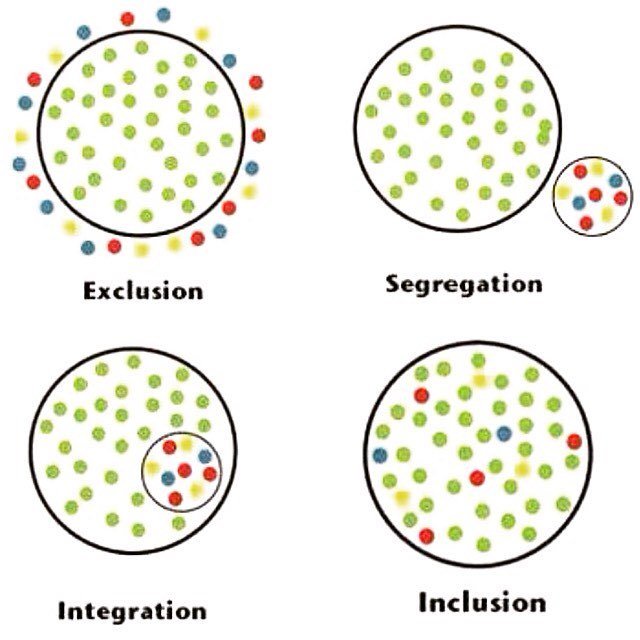
Schools and classrooms talk about being inclusive, or having inclusive classrooms, but what does that really mean? Does that mean that they have kids with learning disabilities in the classroom? Does it mean that they just sit kids with learning differences alongside their peers and clan this inclusion, because they are included in the class? Not exactly. 

Being an inclusive classroom means that it is all inclusive of everyone's abilities. Not just by proximity, but by learning abilities, physical abilities and any emotional consideration as well. This is different from integration. Integration attempts to absorb the child with special needs in to a mainstream classroom. Making the child accommodate to the classroom, rather than the other way around.  In an inclusive classroom of 20 kids, you might have 6 of them have IEP or 504 plans. And you would have your classroom planned out in ways that are accepting of and accommodate these abilities, as well as plan and differentiate for the whole classroom. An inclusive classroom is one where the education of the students benefits all of the students in the classroom. 

So for a child that has to use a wheelchair, to make them feel included, you would have bigger spaces between all of your shelves and areas in order for them to have complete access to get around the classroom. You also might have things that are needed more in the classroom on a top shelf so that it is more easily accessible without them having to ask for help in getting it, since reaching down in a wheelchair would prove difficult. For a child with sensorial or emotional needs, you might have a calming space, or an aide that can sense when this child needs a break and takes them for a walk, or to the gym to run around. They would not be punished for things that are out of their control such as needing to stand during circle, it would be explained to the classroom, "this is how Johnny learns best, just like you learn best sitting down, and Suzy learns best on her wobble chair, and Bobby learns best on his yoga ball, we all learn differently." And all of these things would be accessible to not only the child that has the disability, but to the whole class. That's the difference between integration an inclusion. With integration, you are making the child fit to the classroom. With inclusion, you are making your classroom fit the needs of not only the children with learning differences, but all of the children in your classroom. 

An inclusive classroom is accessible to all leaners. So, this could mean differentiated learning, accessible seating, seating near a teacher, giving a child fidgets if needed. Most of all, a child should be pulled out of the classroom as little as possible for extra learning time. Instead the teacher should "push in". What does this mean? If a child has speech services for instance, whenever possible, the speech therapist should come to the classroom to help the child with speech and language. This obviously might not always be possible as they may need to work on specific skills in a quieter environment. But, whenever possible, the speech therapist should work on speech skills in the classroom where the child is working on speech with his class. Just like a physical therapist would try to work on gross motor skills while the child is at recess or in gym class with his classmates. Again, there may be some instances where the child needs time to perfect some skills in a more individualized situation where the therapist will pull him out, but to all degrees possible, the classroom is more inclusive, when the therapists push in. 

It also makes it more inclusive when the general education teacher and special education teacher and related professionals co-plan lessons together. This way, the general education teacher is better able to teach to the whole class, while being able to take into consideration the individualized needs of the children on her or his caseloads with IEP plans or 504 plans and how to meet their needs and the whole classrooms needs auth the same time. The general education teacher will be able to differentiate her plans to meet the needs of all the students in her classroom. In this way, all of the students may work on the same subject, but in different ways, and possibly at different paces. 

In inclusive classrooms, children should not be grouped together by disability. There may be some cases where children are put in a certain seat for a certain reason, such as when a teacher places a child closer to her due to the child having ADHD and needing less distractions and closer monitoring.  There may also be cases where children are places together by abilities during parts of the day, such as during reading groups. But, for most of the day, children should be mixed together throughout the class so that they feel that they are all included as one classroom. In this way, students needs are accommodated and all children are still all to access the general education curriculum. Some children may do so at a different pace, or may do so with assistance, but they are able to be in the classroom accessing the same curriculum as their peers as much as possible. 

Most of all, an inclusive classroom is one where every student feels loved, accepted, connected and part of the whole classroom! 
Jason To on Twitter: "My new learning today: "integration" and ...