I had my very first social-emotional group last night. I am working with 3 kids ages 2.5-4. This is what it looked like last night after they left < Controlled chaos at best. The kids had fun! Don’t get me wrong. But, you put 3 kids in a room together and you are going to get some form of chaos. I will not mention any names on here due to hipaa. But, I just have to say, even though it was controlled chaos, there were so many improvements even on the first day. I saw the beginning of syllables such as muh for more, as well as signing "more". I saw sharing of a swing. I saw another little girl ask for a fidget to be opened by giving it to another little girl. The same girls went next to another kid to play with the pasta bin. She has not stood next to kids before. They all enjoyed playing with the toys, but there was some melting down the last 15 minutes due to the timing. Have to remember that for next time. There were toys flying everywhere, and then being put away. There was pasta, happily being thrown up, and then being shown how to keep our "happy hands" down with the pasta. There was so much happiness in that room that even if it was chaos for the first day, I think it went really well. Kids did go away learning a couple of things even on the first day, which I did not expect. I had no expectations for the first day at all. I figured they'd just be getting to know each other. But, they exceeded my expectations, as most kids do.
Friday, November 12, 2021
Wednesday, February 3, 2021
This is ADHD
I have two kids with ADHD so I thought I would do a post on what ADHD looks like in our house. This is ADHD for us:
- When you need sensory breaks in between your online classes just so you can concentrate a little bit longer
- When you have to go back to in person school because online school is way to distracting, what with being able to switch between apps, or doing any number of other things in your house.
- When you can do your work upside down, but not sitting in a regular chair. Because sitting makes it too hard to concentrate.
- When you need to run back and forth across the bedroom a few times to "get your energy out".
- When you listen to a direction, but don't actually hear it. So, when someone asks you, "did you do X?" you say, "you never told me that."
- When you can be in AP classes because you are definitely smart enough, but don't have the executive functioning skills to complete them online because, "oh I can go on youtube, oh there's a book I want to read, Oh I can do my math later, Oh look, it's snowing!, Oh I should go outside. Nooooo I cant do this homework, it's too boring. I can't focus on it right now." Yes, all of these things are executive functioning deficits related to lack of focus and lack of self-control.
- When you hear other people talking, but can't help but interrupt because otherwise you will forget what you were going to say if you don't say it RIGHT NOW!
- When you run outside in the snow in the middle of your school day without telling anyone because it's just so exciting, but you lack the self-control or awareness of danger to remember to tell an adult what you are doing.
- When you are constantly on the move, whether it is moving around the house, school or just fidgeting with something.
- When you are in in person school, you have to sit up near the teacher and have reminders to remain on task.
- When you can focus on something you love for hours at a time, but something that is "boring" takes all you energy to complete.
- When you have multiple tasks that you are working on at the same time. Or multiple projects because you like to do many things at once. But that doesn't mean you always get them all done.
Monday, January 4, 2021
New Year
It's a new year, new beginnings. But, here we are, still in the midst of a pandemic. Maybe your kids have gone back to school, or maybe they are still e-learning. Or maybe you are doing some sort of hybrid schooling. Whatever the case may be, it's cold outside and we have been cooped up already for almost a year. For any kids this can lead to anxiousness, restlessness, and well, acting like they are going out of their minds. For kids with other needs, such as sensory processing disorder, or ADHD, you may feel like you are also going out of your mind with them looking like they are all over the place. Covid has led to not only death and illness from the disease, but also many more needs from mental health perspectives, as well as children not alway getting the services they would normally get in school. Such as occupational therapy, speech therapy and physical therapy. Just to name a few. What does Sensory processing disorder look like. Well, here is an infographic to explain it just al little. And this list is by no means exhaustive.
As you can see, some kids are constantly on the move, constantly needing to jump or crash in to things. And without the outlet of gym class, recess, and other things that school may provide such as OT and PT, they may be having a harder time at home doing e-learning. Also, many things that kids may have had as an outlet, such as after school activities like karate, soccer, baseball, etc, have had to be shut down. So they are not getting their activities that way either. Kids that avoid may look a different way, such as having meltdowns over "nothing". Which is actually something in their mind. So, thats the difficult part about all of this. What can we actually DO about all of this? Well, there are some things that can still be done at home. Here are some calming tips from special mom advocate. There are many other things you can do in the home as well, to help your child if they are sensory seeking. An obstacle course can be fun, where they have to follow arrows (can use tape on the floor, or draw arrows on construction paper) up, down, over and under to get to a prize. Different animal crawls can help as a calming activity. Near crawls, crab walks, frog jumps,, there are so many that help as either calming activities or to get your child revved up for school, depending on what you are looking for. Now that we have snow (well, at least we do here in illinois) it can be fun to go outside and roll snow in to a ball to make a snowman. Rolling the snow, lifting it up and putting them together are all great heavy work items. Or shoveling snow if your child is old enough is also great heavy work. Provided they actually like that kind of thing. I have two kids who like to do that and one who absolutely hates it. Whatever you decide to do, hopefully some of these suggestions help so your kids aren't also climbing the walls. Thursday, October 22, 2020
ADHD and the pandemic

7 months in and we are still in a pandemic. We have some schools that are fully in person, some are doing a hybrid model and some fully remote. Whatever the option, many kids are still struggling. Especially if they have any kind of diagnosis that requires a 504 or an IEP. In the spring it was mad chaos of trying to figure our how to get everyone online and fully remote. Teachers did their very best trying to get everyone on the same page, but honestly, even they were still trying to figure everything out. As consequence, some states had grades and tests not count towards the students grade at the end of that quarter.
The fall is different. Everyone has (mostly) gotten their bearings, figured out this pandemic learning and how they are going to teach. So, now students are being graded and expected to stay in class, whether that class is fully online, hybrid or in person. This is good and bad. It presents some challenges to certain students and families. Lets specifically talk about ADHD. Kids with ADHD already have issues with executive functioning skills. What are executive functioning skills and why do they matter, you ask? Glad to help! Here is an article from additude magazine explaining just that Executive Functioning. When kids are in person, they have many supports written in to a 504 or IEP, such as sitting next to a teacher, having frequent checks that they are doing their work, asking them to hand in their work, extra time to do their work, etc. Not all of these transfer over to an online format if that is what your child is doing right now. And this can make for a very frustrating year!
What is different during online learning and how can this go wrong? Well, lets see...With online learning, students have to have organizational skills as well as be able to focus without interruptions and without impulsively looking at something else like going to another tab like YouTube or looking at a book, etc. They need to have the ability to manage time. They are in their own house, so it is very easy to get caught up with going to get some food, see something interesting and forget that they have to log back on to the computer, whereas in the school they had 5-7 minutes to get to class before a bell rang notifying them they were late. It is MUCH different than being in a real classroom. And yet, I get the enormous pressure teachers are under to cater to ALL the different styles of teaching they have to do. And I get that there also are tons of different kids who have tons of different needs. Recently I was talking to a mom who said that her child was having a lot of difficulty staying in class and she got an email telling her that his grade went from a B to a D because he didn't stay in class or finish any of the work. Come to find out (he's 9) she had no idea he wasn't finishing the work because there was no communication about that and he was telling the teacher it was too hard and all the teacher would say is "if you focus it wouldn't be." He has severe ADHD. Lack of focus is part of his problem as is impulsivity. He gets bored, he turns off Zoom. And mom works during the day, at home. She is not always there to watch him every second. Mom told the teacher that online learning is really difficult for him due to his ADHD, but he is trying. The teacher went on to say, "online learning has been shown to be easy for everyone and has proven benefits." Now, clearly this is not true. There are many students that are struggling with this. How do we help them? How do we make it easier for them to succeed?
One thing we can do is ask for more online learning friendly accommodations in the IEP or 504 plan. Currently, the only accommodations in my daughters' plan are "teacher check in throughout the day particularly during independent work time" "Abby will keep her camera on" "teacher reminder to turn in work" ""homework calendar updated weekly that parent can access" "teacher reminders to go re-check work". Yet, despite these, my daughter failed to turn in work for over a month. So, something is happening that she is losing focus, her impulsivity is making it harder to do her work and she is not self-motivated. So now, we are way behind and playing catch up. She was impulsive and had a lack of focus in person, this is true, it's why we got the 504 in the first place. BUT, she turned in her work and had good grades. So, we can see there is a change. But, in a pandemic we need to keep everyone safe, so she is still at home. How do we help her, and children like her to either get their grades up, keep their grades up, or not lose hope?
One thing parents can do at home is having timers and rewards. So, when the timer goes off at the end of class, give a movement break, give a little fidget, anything to help get them moving a little bit since they are mostly sitting in front of a screen all day. Kids with ADHD also have trouble with intrinsic motivation, so sometimes extrinsic motivation will be needed to get them started with self-motivation. This can be whatever you decide. Little toys from the dollar store, a handful of M&M's for finishing all their homework or staying in class the whole time, it's really up to you and your family. Another thing you can do is chunking assignments. So, if your child is like mine and missing a ton of assignments, having them break them up in to chunks so they don't freak out and say "OMG I have HOW MANY assignments to finish?!? I'll never be able to do that!" and just shut down. Chunking the assignments in to bites of 3-4 or however many you think your child can handle will make it more manageable. And this can work even if your child has no missing assignments, but usually gets a lot of homework, or the homework they get is really long. Break it down in to answering 3-4 questions, take a 5 minute movement break and answer 3-4 more. It may seem like it will take a lot longer this way, but, it beats the "I can't do this so I won't even try!" battle. And now is the time for a lot of positive praise for the assignments they DO finish! The other thing you can do is find out where their interests lie, and if they are having a lot of trouble with a subject, see if you can incorporate their interests in to that subject to show they have mastered it. For instance, if your child has trouble writing, but loves to talk, have him do an oral presentation to show what he learned, or a podcast, or pretend he is a radio host. If your child loves art, have him draw an artists rendition of his interpretation of what is going on in a story they learned about. These are just a couple of ways that you can alternate the homework, but still show mastery. And these can all be incorporated in to an IEP or 504.
As I said, Executive functioning skills are hard for kids with ADHD. But, there are ways to accommodate for them whether at home or in school, or if you are doing a hybrid option. We are all going through a massive change right now, no one likes any of these options. One thing I have found helpful is helping my daughter prioritize which assignments need to be done right away, with need to be done soon, and which can wait a day or two. This also helps her not be overwhelmed and helps her finish more work. And the teachers have noticed her progress and have started praising her more, which gives her some of that extrinsic rewards, which hopefully will transfer over to becoming intrinsic eventually and she will want to finish it for the reward of being successful. What have you found to be helpful for your child with ADD/ADHD?
Wednesday, September 9, 2020
Why wait?
Many times, parents that I help are concerned that their kids are not speaking, or are not speaking in sentences that are understandable enough to get their needs met. Let me stop right here and say, I am not a speech therapist. I have worked with many great speech therapists and speech therapy assistants over the years and learned a lot from them, but when there is a speech concern for any of my kiddos, I call in the experts. That is their field. That being said, I do work on language during play with kiddos. Especially social language. We also work on language to get needs met such as either using signs, or words like "help" "want" "more" "all done" etc. Using language during play, talking about what children are doing is something that comes natural to me, but doesn't always come natural to everyone else. And I am also a talker when playing with children, so when I learned about expectant wait times, it was something new to me too.
Expectant waiting is when you say something to the child (or person you are talking to) and give them time to process the information and respond. This can take any amount of time you feel the child may need but usually we start with about 10 seconds which when you think about it seems like nothing, but when you put it into practice feels like a really long time! And when you have parents that are also talkers (which is nothing bad at all! As I am a talker as well, and exposing a child to language is always a good thing!) having them slow down and wait for a child to process the information that they have given, and answer a question or respond to a command, can be difficult at first. I know it was a little hard for me at first too!
Children who have any kind of speech delay, receptive or expressive, or are hard of hearing, will especially need wait time to process information or questions that you ask of them. When we ask questions of our younger children, I like to try to phrase it in smaller bites "you want milk?" "give me ball." "go get doll." while they are still working on learning to answer questions or follow directions. Then as they get better responding to these directives, start to expand the language. "Do you want your ball?" "Go get your doll." "Give me your blue block." Starting with longer requests can work, but if they are getting frustrated because they don't understand or are having a harder time processing too many words, breaking them down in to smaller chunks may help them have an easier time processing and giving an answer or responding to your request. And giving the time they need, even if it feels like a really long time for you, will help your child have decreased frustration levels and everyone will be happier as your child learns to express themselves and get their wants and needs met.
*Again, these are things that have worked for me as a Developmental Therapist, having worked in EI for 8 years. I have worked alongside many great speech therapists, and speech therapy assistants, but always refer my kids to speech therapists when there is a speech concern.
Monday, August 24, 2020
Getting ready for school
How does school look for you this year? For us, all 3 of my kids are starting online. Which I, personally could not be happier about right now. I have been hearing so many reports of kids going back to school and being sent home the first day with civid. Or just in our school district, they haven't even started and there is a case of covid at one of my kid's schools. We are fortunate that our kids are able to do online school while I and my husband work from home. I am able to make my job flexible enough that I can help out all 3 kids and take an hour here or there to also do my work via zoom, or once or twice a month see a kid in their home. I understand not everyone has that ability. Nor does everyone have the patience for it. Many people have to work right now and are unable to be there while their kids do online schooling. Making it impossible for their kids to get any work done. It's a difficult situation all around. The teachers can only work so many hours in a day. But parents may not be home until 4-6 pm in order to help their children. And in the instances of younger children or children with executive functioning issues, that means school is not getting done. At lest not until the parents are home. And by then everyone is exhausted. It is a very difficult situation this year. I think the best we can do is concentrate on making sure everyone is healthy, both mentally and physically, and feels loved and appreciated (teachers, parents, and kids), and try to get a little leaning in there as well ,while respecting it may not look the same for all families. I've set up some cozy corners with what space we do have in our house. Admittedly we do have a lot more space that our old house, but not a ton to make a whole school room. But, this is just an idea of what we have done with some of our space with the items that we have. And I know that all the kids teachers will likely give is more stuff to include as well. I also have items to supplement learning as need be if the stuff they are learning is too hard and we need to take a step back to re-learn some things. Because lets be honest, last spring was hard! It was hard on teachers figuring everything out. It was hard on parents figuring everything out. And it was hard on the kids just trying to muddle their way through. We may need to review a few things. And that is perfect OK!

Wednesday, August 5, 2020
Changes
![]() |
| Add caption |
Monday, July 6, 2020
Working on Identification Skills
Monday, May 25, 2020
What to buy?
I get asked a lot by parents what they should buy their children. Whether it be during the holidays or birthdays, or more recently during quarantine to keep kids busy. I have done videos in the past on how to use items you have in your own home, but decided to also do a video on my favorite toys if parents really want to buy toys and don't know what to buy. These are just a few things to have. And if you don't feel these are appropriate to the age range of your child. please feel free to contact me and we can discuss ways to use toys or objects you have, or age/stage appropriate toys to buy!
Monday, May 18, 2020
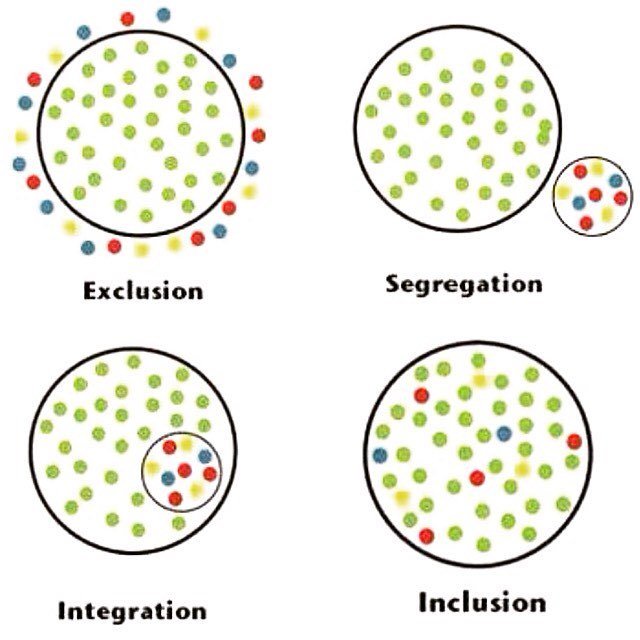
What does inclusion look like in a classroom?


Wednesday, May 6, 2020
Working on matching and receptive language skills
In this video, my son, who is 8, was helping me by showing how to work on matching, color identification, gross motor skills, and receptive language skills. He had to really think about which body part to put on which color (working on receptive language skills, identifications skills, and gross motor skills-it was a little hard for him to balance for some of them!). He also worked on throwing different color bean bags in to different colored circles which not only works on identification skills, but gross motor skills throwing the bean bag at a target).
This can be modified for different skill sets. For younger children you can just have the circles set out in front of you and have them match beanbags to circles. If they are ready to identify colors you can choose colors for them to throw in to the circles or put in the circles. You can also say "give me x color" when you are cleaning up the beanbags to check for accuracy in identification. If they are walkers you can have them walk over to a certain circle that you put out. Or use it for positional words by putting the circles or beanbags in different parts of the house and tell them "go put the beanbag in a circle that is under the chair/on the couch, next to the tv, etc." Or even play a game of I Spy with older children telling them "I spy a beanbag that is red and it is in a room that we eat in." And you don't have to use this specific toy. You can use colored construction paper and have your child jump on it. Or cut the pieces in half and have them match pieces together. as well as work on the same positional words as above. There are so many fin ways to use this to get your child moving and working though play!
Tuesday, May 5, 2020
Covid and ACES

What are ACES and how do they relate to Covid right now? ACES are Adverse Childhood Experiences. Almost everyone has gone through some Adverse childhood experience at some point in their life, whether it was their parents divorcing, a parent losing a job and that creating financial instability, perhaps a parent being incarcerated, there are many of them that are in this link. ACES
How does this relate to Covid right now? Well, one of the things that can cause an Adverse Childhood Experience is parents losing their jobs, homelessness, not knowing whether you will have enough food to eat. As well as being scared you or your family members will get sick or being scared of your family members dying. And we are all dealing with that in some manner or another right now. Whether you have lost your job, or are underemployed, whether you are worrying about your or your child's health, whether you have a family member that is sick with Covid and your child knows this and is afraid that they may die. These can all contribute to adverse experiences. The other thing that can happen, and is happening right now, is parents may be having a hard time with their children home all the time. They were used to the 6-7 hour break they would get while their child was at daycare/school. And we have seen a spike in child abuse cases. It's more difficult to ask for help form elderly relatives, due to not wanting to get them sick. Perhaps home visiting programs have been converted to teletherapy, and many people are not used to reaching out to ask for help when they need it. So, we have seen an increase in parents abusing their kids and mandated reporters having calls to DCFS and the children are placed in foster care.
Right now is a stressful time for a lot of people. Many people are finding that they are having to try to do their work from home, as well as help their kids with remote learning, and if you have a child with a 504 plan or an IEP, you are trying to individualize their learning so that you can best help meet their needs. And if you don't have an education degree, that probably seems next to impossible. Never mind all of the regular stuff like cooking, cleaning, grocery shopping, etc. No one would blame you if you just said "oh forget it," and let them watch tv while you finished your work.
Here's the good news. Adverse childhood experiences do not have to be forever. I love this quote in this article Adverse childhood experiences "If the brain can be hurt, it can be healed" How? Be using positive childhood experiences. If you are having too hard of a time with your child's trigonometry homework, and you feel you both getting frustrated and you want to blow, set it down. Stop what you are doing and take some time. If you are not working at the moment, maybe go for a walk around the neighborhood just the two of you, go get some ice cream together, watch a tv show together. Do something that makes the two of you feel good. If your infant is crying and crying and crying and you are at your wits end, put your baby down and walk away for a bit. I promise you, your baby will be ok. Also, right now, you can utilize The Fussy Baby Network for free during Shelter in place. Utilize them! They are a great resource of infant specialist and are there to help with no judgment!
Here is another great article about ways to avoid aces during covid. Doing positive things together such as baking, coloring with your children, playing games, doing puzzles, will help heal the brain., Look, no one is perfect. If you lose your job, or have food insecurity, or you become underemployed, or worry about your child getting sick, you are going to have feelings about that and your children are going to know. This is not saying do not feel your feelings because it will traumatize your children. This is just giving you advice on where to go and how to also create positive experiences for your children so that we don't continue seeing spikes in child abuse cases, so that we don't see spikes in domestic violence cases. There are resources out there for you. If your child is in Early Intervention, utilize your therapists, ask them for resources for your child for while you are sheltering in place. If your child is in school, utilize the teachers. Ask for activities for your child to do indoors to keep them active while you are working. If your child's teachers or therapists are creating more stress because they are scheduling all of your child's meetings during your work time, and you have to help facilitate this, talk to them and explain that this will not work for you. If you can come up with a plan, great. But if not, let them know that you will work on what you can, when you can, but first and foremost, what matters is your child's mental and physical health. And yours as well!
Wednesday, April 22, 2020
You have to Maslow before you can Bloom

Friday, April 17, 2020
Monster Meditations

Thursday, April 16, 2020
Reading With Kids

I've posted before about the importance of reading to children. This includes babies and young children. But all children benefit form being read too. When babies are young, they benefit from reading the pictures, just talking about the pictures in the book, patting their hand on any sensory pictures so they get the idea of pictures and words having meaning. As they get older, children can sit in your lap or next to you, wherever they are most comfortable, and if you have a hard book, you can let them try to turn the pages, so they learn this important skill of how to hold a book, how the pages turn from left to right, that the words go from left to right and still learning that the words have meaning and connecting pictures to the words.
Reading to children at a young age also turns them in to lifelong readers. Exposing children to books and having them see you reading books and making these happy memories will help make it more likely that they will have a lifelong love for reading.
Reading also increases children expressive and receptive language development. As you are reading to children they are connecting the pictures to the words, especially if you are helping them touch pictures and labeling them at the same time. They may start practicing saying sounds and imitating you as they are hearing you say words while they are listening to you read. So when you are saying "car", after reading a vehicle book many times, you may hear your child start to say "cah" one time. This is what repetition is so important.
Reading is also a great way to bond with your child. You are sitting there with them one on one, showing them pictures in the book, showing them the words on the page and helping them learn about different things. As they get older, you can share more in depth stories with them that have more chapters and more imagination to them, and you are still able to bond with them. Reading to your child before they go to bed can be a great soothing way to end the day with your child.
With that. I have included a video of myself reading Mo Willems "Let's Go for a Drive!" In it, I included some ways to do hand motions with your children, to get them more involved in the story, and to help them stay more attended. You can do this with any story that you read to your child. If you have a story that you feel is too long for your child and they won't attend to it, just read the pictures and perform hand or body motions to it. Any time you get moving with a story, or there is a sensorial aspect to the story, a child is much more likely to pay attention. I hope you enjoy the story!
https://vimeo.com/408190209
Wednesday, April 15, 2020
IDEA and 504 Accommodations

Have you seen this graphic? I'm sure you have, it's been floating around in many different forms for quite a while. It shows how equity and equality are not the same thing. Many times in schools we will hear teachers say "I can't give Johnny a fidget because then everyone will want a fidget and I need to treat everyone equally." Or, "I cant let Sally sit on a yoga ball, then everyone will want a yoga ball and I treat everyone equally here." But, equality is not the same as equity. We see in the first image, that by treating everyone equally, only two of the children are able to see the baseball game. In the second image, all 3 are able to see the game by each one being given the support they need. So let's talk about this for a minute.
Let's pretend you have a child in your classroom who is 8 and has ADHD. Your child has a 504 or IEP meeting with you where you start to work on accommodations and modifications to make sure everything is equitable and accessible. As you start the meeting you hear modifications such as having Sally do only odd numbers on the worksheet at home, having her sit next to the teacher, bring in fidgets, sit on a disco sit, draw her answers for reading instead of writing them down. You start to speak up, "wait, but then all of my students will want to do that. How is it fair that she should only do half the work that they do and get to draw in class instead of write her answers down?" Well, Sally has a much shorter attention span than the other students, so when she gets home, it takes her 2-3x the time to do her work that it does her classmates, so reducing the workload, makes this equitable. Sally has a hard time writing out the answers to her reading questions, though she understands the questions and knows what she wants to say, she can't put it to paper. But, she is great at art. So, you are capitalizing on her strength in art, and using that to assess her understanding of the reading. If you were to make her write out her answers, which is more difficult for her, she would get a lower grade, even though she has the understanding, she just does not have the ability, right now, to dictate that understanding. This makes her learning more equitable. You are also letting her have fidgets because her mom has found when Sally has something to do with her hands, she is able to better focus on whoever is speaking. So, she will be able to listen better to what you are saying in class and will remember more of the content.
Many times when you explain to children that you are giving them each what they need to succeed, they will understand. They understand the Johnny speaks in Spanish and that is why the assistant translates things in to Spanish for him. They understand that Susan wears hearing aides and these help her to hear better in the classroom. Or that Bobby is in a wheelchair because his legs do not work in the same way that ours do, so this helps him to be able to get around the class. If you explain that other things like having fidgets can help someone learn, or that drawing helps someone who can't write as well, children will understand a lot more than we give them credit for.
Tuesday, April 14, 2020
What to do with all these eggs?
Now that Easter is over and you have all these eggs left over, what should you do with them? Depending on your child's age, there are many things you can do with them. If you already have a sensory bin set up, you can add the eggs to your sensory bin to use to scoop items (if you are working with families that have, or you have food insecurity, you can use non-food items in your sensory bin to scoop and pour, or even water), you can hide the eggs in your sensory bin and have your child try to find certain colors of eggs, you can work on open/close, in/out. For younger children you may need to do some hard over hand assistance to help them to work on opening and closing the eggs as you say "open" "close". You can put items in the eggs, but if your child still mouths items, please be watchful so they don't put anything in their mouth. You can count how many of the eggs they find in the sensory bin. If the egg tops come off, you can try putting different colored tops to bottoms, (such as yellow with blue, red with orange, etc) and see if your child can take them off and match them with the correct colors. You can also add them to your child's pretend play and have them use them to feed animals, babies, etc.
If you have older children you can write down things to do or find on pieces of paper and put it in the eggs. Such as "go find something small" "do 10 jumping jacks" "find 5 red things" and so on, and your child would have to do the item that they picked. Older children can also use these to do an egg race, where they put the egg on a spoon and try to balance it while walking. It can be done solo or against a sibling to race and see who does it faster without dropping their egg. You can also hide the eggs in certain places and work on positional words, giving clues like "it's on top of something brown." Or for the younger ones just saying "it's on top of the couch." Or "it's under the table" and having them run to get it, crawl to get it, jump to get it, etc, so they work on identification skills, gross motor skills and receptive language skills at the same time. You can also have children with expressive language delays try to imitate the name of the colored egg after you, or the first part of the word, or any sound.
These are just a few ideas of what to do with all of those eggs. What are some things you have done?